Thursday, February 7, 2008

Climate Change


In David Michaelis' brick-sized biography of Charles Schulz, Schulz and Peanuts, Michaelis notes dramatically that young Sparky Schulz, growing up in Saint Paul, Minnesota, would frequently have to venture out on his own in arctic weather: "For Sparky on the way to school, thirty degrees below zero, with a whip-like wind making it feel another twenty degrees colder, was an 'ordinary' temperature."

Thirty below! I grew up in Chicagoland, which gets plenty cold in the winter but never once, as I recall, hit thirty below, much less on an "ordinary" basis. Not Saint Paul either, apparently: According to this site, the record low in Saint Paul is only 32 below zero, and that was set in 1996. The average low temperature in January is a tolerable six degrees above zero. (As I type this, it's a balmy 18 degrees in Saint Paul.)

Schulz and Peanuts
is just jam-packed with facts, most of which I can't check on the Internet. (The absolutely perfect jacket design, by the way, is by Chip Kidd.) I'm just afraid that Michaelis will soon tell me that Charlie Brown was named after a wide receiver for the Redskins.

Wednesday, February 6, 2008

Sexy Sadie, 1917-2008


The Maharishi Mahesh Yogi, dead at the age of 91. Admit it, you thought he was already dead, didn't you? Well, now you're right.

When the Beatles went to visit the Maharishi in India in early 1968, it was the first vacation they had taken since they became stars - which means it was probably the first real vacation any of them had ever taken. It was also probably the beginning of the end for them as a band. John Lennon left London still married to Cynthia, but by the time all the Beatles got back, he and Yoko were inseparable. But the Fabs no longer were.

That was hardly the end of the Maharishi's notoriety. Transcendental meditation, Mahesh's main bag, really took off in the 1970s, and the Maharishi established Maharishi International University in 1974 in, of all places, Fairfield, Iowa. The late Canadian Doug Henning, a TM and yoga freak, actually got married at MIU in 1981.

The Maharishi's dying words were: "The Maharishi Mahesh Boo Boo lives on."

Civic Duty

This being Super Tuesday, I did my part by participating in my first-ever caucus, held a five-minute drive from my house at Isaac Newton Middle School (motto: "When Gravity Fails and Negativity Don't Pull You Through"). But the street that heads from my house over there began to be clogged about a mile from the school; fortunately, I knew how to approach it from the back. I also knew to duck into a neighborhood just before I reached the school so I could park on the street, but even there, I had to drive three blocks before I could find a space. From there I jogged through a snow-covered field with some guy who apparently thought they were going to start the caucus without him, but I was at the school building by 6:50.

A chilly, helpful soul had a laptop set up in the parking lot with which he could give us our precinct numbers. A young South Asian woman with an Obama sticker on her jacket then helpfully directed us to the school's east entrance, the only door that was open - but when we got to the east entrance, the line snaked all the way around to the building's west side. To quote Weird Al Yankovic, I hadn't seen a crowd like this since I went to see the Who.

Inside the school building, it was just as jammed; I quickly found out there were pockets of people along some of the corridor walls finding people's precinct numbers for them ,and slowing up traffic. Finally, I made it to the school cafeteria, which was also so full I could hardly move. It took me another five minutes to fight my way over to precinct 233. There, seated around one of those cafeteria tables with the attached disc-like seats, was a neighbor lady from across the street, who showed me how to sign in.

Precinct 233 was made up of significantly more women than men, by about a three-to-one margin. There were about three people under the age of 35, which makes sense if you know my neighborhood. I asked the guy holding the 233 card, stuck on the end of one of those wire poles like they have at Fatburger, if he needed some relief. He did, so I did my part and showed my pride in Precinct 233 by holding aloft our number for the next ten or fifteen minutes.

Given the crowds outside, it was a bit miraculous that we were able to get started around 7:15. About twenty feet from me, a woman began speaking instructions into a microphone, but I could literally hear one of every three words she said. I could have understood more if she had just turned and spoke at me in a normal voice. The speakers for the microphone must have been in Boulder or something.

Somehow, word made its way over to us that we were to begin with a straw poll, in which someone was to poll our members, and write down who voted for whom. The woman in charge of our precinct did this, sensibly enough, by asking all the Clinton supporters to sit at one table, and the Obama supporters to sit at another. The Clinton people didn't fill their table, but many of the Obamans had to stand. She quickly counted heads: 25 for Obama, nine for Clinton.

Then came what should have been, had there been more candidates in the race, the horse-trading part of the evening. Anyone receiving less than 15 percent of the vote was supposed to be disqualified at this point, and their voters wooed by the supporters of the remaining candidates. I initially hoped to be backing John Edwards at this point, which was a disappointment, not just because I thought Edwards the best candidate but because it would have been nice to get plied with liquor or sexual favors or whatever it is that causes a caucusgoer to swing his or her support.

There would be no such shenanigans this evening. We simply had our final vote - it has a name, but I couldn't hear the woman with the microphone - which was Obama 25, Clinton 9.

The next step was the assignation of the delegates. Precinct 233 was entitled to send four delegates to the Democratic county convention, and while I would have been happy to go, half the people raised their hands when our leader asked who wanted to be a delegate - one young woman of about 20, who was there with her father, was really excited about the possibility of being a delegate - so I decided I wouldn't take that thrill away from anyone.

Although we had been instructed to elect delegates, someone suggested we should just use the all-American format of holding a raffle, so someone produced a Kansas City Royals cap, anyone who wanted to wrote their name down and tossed it in, and a neutral person drew out three. (I don't know how the Clinton delegates chose their lone representative.) The first person picked was that 20-something's father, who showed no inclination to give up his seat for his daughter. She was eventually picked as an alternate.

And then that was it. At 7:45 pm, we were done. I walked out the side door of the school into the frosty February night.

Tuesday, February 5, 2008

Pink Floyd Is the Only Band That Matters

Here in our sleepy subdivision in a sleepy suburb of Denver, someone has spray-painted on a public fence in big red letters: "MOTHER SHOULD I TRUST THE GOVERNMENT."

The Means of Production


Summer before last, Danger Mouse, the producer behind Gnarls Barkley and thus behind the inescapable hit "Crazy," was profiled by Chuck Klosterman in the New York Times Magazine and talked about how a music producer was analogous to a film director. Mouse mentioned how impressed he was with Woody Allen, and how he wanted to be like him. "Woody Allen was an auteur: He did his Thing, and that particular Thing was completely his own," Mouse said, with capitalization courtesy of Klosterman. "That's what I decided to do with music. I want to create a director's role within music, which is what I tried to do on this album."

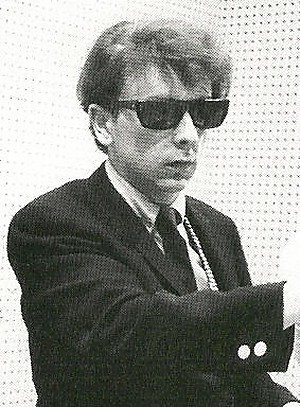
"Musically, there is no one who has the career I want," Mouse said. "That's why I have to use film directors as a model." But there was someone who had that career, and Klosterman even mentioned him in the piece (although he just as quickly discarded the comparison): Phil Spector.

I was reminded of that Gnarls Barkley story when I read Tearing Down the Wall of Sound, Mick Brown's recent biography of Phil Spector. (You may have noticed notions from that book popping up in OPC recently.) People don't think of Crystals records or Darlene Love records or Ronettes records as much as they think of Phil Spector Wall of Sound records. Indeed, Spector is the only producer I know of who has gotten his own box set, although that may be because Spector was the only producer who owned his own label.

I also think Spector was unique in that he didn't really write songs all that much (although he would often appropriate writing credits), unlike Leiber & Stoller, or Holland-Dozier-Holland, or even Jim Steinman, all of whom were writer-producers. (So is Danger Mouse, for that matter.) He was just a producer (although he was also an accomplished guitarist). The other true producers, like Scott Litt and Kim Fowley and Bill Szymczyk, never got all that famous, much less their own box sets.

One cool thing about the Wall of Sound is that it was produced live in the studio, without overdubs, except maybe on the vocals. Spector had his army of six or seven guitars, his four bassists, strings and horns and what have you, all playing live, straight through. I bet that was something to see.

Monday, February 4, 2008

Our Sacred Honor

In a tremendously entertaining Super Bowl, maybe my favorite part was this short film that Fox showed right at the end of the pregame show. (This was the only part of the pregame show I saw; I was watching Rear Window on DVD, and I pity anyone who sat through four hours of Fox instead.) The opening is unfortunately cheesy, but stick with it: The NFL players and coaches reciting the Declaration of Independence is quite moving. Plus it gave me a chance to explain to my seven-year-old son what the Declaration of Independence was.

The best part is a fired-up Michael Strahan with a bunch of New York City firefighters. It's great to see Alan Page, too. Lovie Smith doesn't seem too into his bit, but then again, Lovie Smith never seems too into anything.

Saturday, February 2, 2008

Medieval Barber


One more note on Steve Martin: He's very closely identified with Saturday Night Live, an institution he helped fuel and which fed off of Martn's own rising star in the late 1970s. Their comedic styles were obviously greatly sympathetic, and Martin did some of his best work on SNL - yet, on a personal level, the two meshed far less than you might think.

Part of it was just a simple age thing. When Martin hosted SNL for the first time on October 23, 1976, he was already 31, the same age as Lorne Michaels; John Belushi was 27, Dan Aykroyd 24, Bill Murray 26, Laraine Newman 25. Gilda had just turned 30.

But a bigger part, probably, was drugs. Drugs fueled the early SNL as surely as ignorance fuels the Rush Limbaugh radio show. Steve Martin wanted no part of that: In the late 1960s, he notes in Born Standing Up, one night after he had smoked some pot, he had a severe anxiety attack that lasted the remainder of the night and into the next day (Martin would continue to have anxiety attacks for some time). The incident made him swear off marijana and any other drugs for the rest of his life.

For a variety of reasons, then, Martin kept his distance, no matter how well he clicked with the cast onstage. Aykroyd and Belushi had bought a crummy downtown bar, the Blues Bar, for aftershow parties, where the cast (except Jane Curtin) would spend the remainder of Saturday night. "I ran into Dan early one afternoon, and he was sort of black and blue, and I said, 'What happened?' and he said, 'Oh, I got pushed out of a moving taxi,'" Martin says in Live From New York. "They were wild, Dan and John. I never went to their bar, the Blues Bar; I wasn't that kind of guy."

It's Raining in My Heart

The music has been dead for 49 years now: It was on this very night, back in 1959 (the flight took off at 1:00 a.m. on February 3rd), that the plane bearing Buddy Holly, Ritchie Valens and the Big Bopper - plus pilot Roger Peterson - went down in Clear Lake, Iowa, shortly after taking off in a snowstorm. (Bob Dylan had been at the tour's show in Duluth three nights earlier, on January 31.) Waylon Jennings had gotten off the plane just before takeoff, giving his seat to Valens; Dion was also on the tour, but decided not to fly that night.

Everyone would agree that John Lennon died far too young, right? If you add together the ages of Buddy Holly and Ritchie Valens, the two Rock & Roll Hall of Famers on that ill-fated flight (although Valens got in on sort of the Ross Youngs plan), they still don't add up to John Lennon's lifetime.

Buddy Holly, coming from Nowhere, Texas, sure accomplished a lot in his short life, didn't he? When he was only 18, he opened a show for Elvis in his hometown of Lubbock, then played on a bill with Bill Haley and His Comets, whereupon he was discovered by Marty Robbins' manager, who arranged for Holly to sign a recording contract at the age of 19. "That'll Be the Day" went to Number One on Billboard's Best Sellers chart two weeks after he turned 21. He toured England at the age of 21, then came back home to marry his soon-to-be-widowed bride. When he was 22, he split up with the Crickets and went solo.

Then, at 22 years, four months and 28 days of age, he was dead.

Friday, February 1, 2008

Celebrity Sweepstakes

I was watching SportsCenter this morning without the sound as I went running, so correct me if I'm wrong on this: Tom Brady is dating Britney Spears? And Britney has had to be hospitalized with a high ankle sprain? It's all so confusing.

Blows Against the Empire

David Lynch, you may know, eschews chapter breaks in the DVD releases of his movies, preferring that people watch them straight through from beginning to end. This comes as a real problem with something like Inland Empire, which is three hours long and doesn't have any sort of traditional narrative, to boot; I haven't had three uninterrupted hours to watch a movie since 1996.

There's plenty that's compelling about Inland Empire, especially Laura Dern's performance in the film-within-the-film as an abused housewife telling stories of her drunken marriage to a complete loser, conversing with some sort of psychiatrist or parole officer - it's really hard to tell, which should be no surprise to anyone who's seen a David Lynch movie. Fortunately, there's a way to cheat Lynch on this and watch the movie in several sittings, even though the main menu doesn't offer chapter stops. There are, though, 39 unmentioned chapters on the DVD, which you can skip through each time you sit down to watch it - you just have to remember the number you left off on.