Friday, August 29, 2008

The Man-Child of Motown Meets Middle Age


For all the hoo-ha over Madonna's turning fifty a couple of weeks ago - even OPC felt compelled to mark the occasion - there has been remarkably little discussion over the fact that Michael Jackson turns 50 today. It's hard to imagine Michael at 50, isn't it? He's older than the guy who just accepted the Democratic presidential nomination.

It's also kind of funny how Madonna and Michael, although almost exactly the same age, sort of took turns being the most popular pop star in America. Michael burst onto the scene in 1969, when he and his brothers started a string of four straight Number One singles, and he was one of the biggest stars in the world through Thriller in 1982. Madonna didn't even release her first album until 1983, when Jackson was just passing his peak.

Of course, that's not entirely fair: 1987's Bad was a big hit for Michael. Even though it was a clear step down from the world-dominating Thriller, Bad did spawn five Number One singles of its own.

Then there's 1995's HIStory, one of the biggest slaps in the face that an artist has ever laid on his fans. In case you've forgotten, it was a double album, one disc of which was greatest hits, the other of which was new material. If you were a big Michael Jackson fan, you already had all the hits, but if you wanted the new stuff, you had to buy them all over again. Thanks for nothing, Michael. But happy birthday anyway.

Wednesday, August 27, 2008

Hot Schweitzer


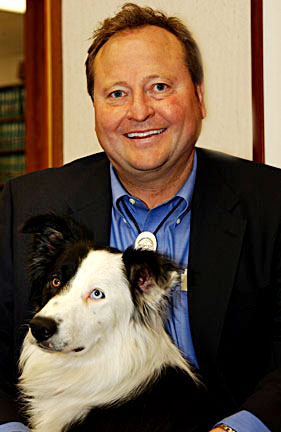
One of the big stars to emerge at the Democratic National Convention last night was bolo-wearing Montana governor Brian Schweitzer. As usual, OPC was all over this phenomenon a long time ago. Back in 2005, I persuaded Rolling Stone to commission a piece by me for the Hot Issue with Schweitzer cast as the Hot Politician. Also as usual, my perspicacity was not fully appreciated: A little thing named Katrina came along, and Sean Penn went down to New Orleans, and long story short, there wasn't room for my Schweitzer story.

Rolling Stone readers' loss is your gain, however. Here, in its entirety, is the coverage of the Hot Politician of 2005, Brian Schweitzer:


“Let me tell you why I can change the world,” Brian Schweitzer is saying from Beulah, North Dakota, home of the only plant in the U.S. making clean gas out of coal. “Montana alone has enough coal to use this process and produce all the fuels that we need for this country for the next forty years. Then the sheiks, the crooks, the dictators and the rats, they can drown in their own damn oil.”

It’s that kind of energy and forward thinking, combined with the fact that he’s a progressive in a traditionally red state, that has catapulted the man who’s been in the Montana governor’s mansion for less than a year to national attention. John Kerry dropped by Helena for a visit in August. “He speaks the truth, and he gets things done," says Democratic National Chairman Howard Dean. “I hope he’s got a future in the Democratic party nationwide, although he doesn’t seem like he wants to leave Montana.”

Schweitzer, 55, who grew up on a farm in central Montana and still wears bolo ties, scoffs at the idea that he could be a presidential contender in 2008. “I got the best doggone job in America,” he says. “And I can still fish the best trout streams in America anytime I want to.” After getting his degree in international (!) agronomy from Montana State, Schweitzer decamped for Asia, South America and eventually Saudi Arabia as an irrigation consultant. Schweitzer returned to ranching in Montana in 1986, then decided to enter politics. “It graveled me when I would see folks that I considered not particularly bright people representing the interests of the people,” he says.

A near-miss run for Senate in 2000 led to his triumph as governor in 2004, as Bush was carrying the state by almost 20 points. Schweitzer credits his victory to ads that combined his liberal ideas with his Montana nature. “They’d see me sitting on a horse or even carrying a hunting rifle, talking about something other than riding a horse,” he says. “For those who weren’t listening, they looked at me and said, ‘There’s a Montana guy.’ For those that were listening, they could understand what my plans were.”

So when he took office, Schweitzer was able to bulldoze his progressive agenda through: a child health insurance program, a renewable energy standard, a targeted tax credit for small businesses to provide health insurance, a scholarship program. The only attack dizzied Republicans have been able to raise against Schweitzer is a pseudo-scandal over who paid for his inaugural ball. “They also don’t like it that I wear jeans to work and bring my dog,” he says.

Schweitzer has also taken on bigger foes. Earlier this year, he asked the Department of Defense to not deplete his National Guard services when it came to Montana’s forest-fire season in July and August. “Homeland security in Montana means fires,” Schweitzer says. “Our Guard has twelve Blackhawk helicopters; eleven of them were in Iraq.” Despite Schweitzer’s entreaty, or maybe because of it, only two other states in the nation now have more of their Guardsmen deployed overseas than Montana.

That didn’t turn Schweitzer against Bush’s Iraqi adventure, however; he was opposed from the beginning. “How are you going to turn around 2000 years of cultural history by sending in the military?” he says. “And in Iraq, he was one of the dictators that we had a thumb on. He couldn’t move a truck from McDonald’s to change oil without us knowing it. So it didn’t make sense to me, and it’s not making much sense now.”

Still, he has resisted calls to move his act to a national stage. The last Democratic president was also the governor of a small, conservative state, but Schweitzer says his situation is different. “It’s a lot easier to leave Arkansas,” he says, “than it is to leave Montana.”

Tuesday, August 26, 2008

I'm Gonna Add Some Bottom

I heard Foreigner's "Feels Like the First Time" on the radio the other day, and for some reason I focused on the bassline. It just went bomp, bomp, bomp, stuck on the same note, banging out 4/4 time. It added nothing to the song, except for maybe a tonality to the bass drum. I guess there were a few points where the bassist - Ed Gagliardi was his name - played some different notes, but for the most part it was as monotonous as it could be.

(The song was followed on the oldies station I was listening to by the Rolling Stones' "Mother's Little Helper, with a bassline that gave the song a lot of energy and texture. All it took was a little bit of melody and a willingness to vary the rhythm. It's unfair to compare any other band to the Stones, but hey, maybe those guys in Foreigner should have been listening to them a little more carefully.)

My music library is seriously short on late-1970s arena rock, by design I might add, but as I recall that style of bass playing was very popular back then. Maybe it made sense in a stadium full of kids bobbing their heads to it as they held up their lighters. One other song I noticed the same bassline on was "Eye of the Tiger," which came out in 1982, five years after "Feels Like the First Time," so the basses were stagnant for at least half a decade.

As for Foreigner, Gagliardi was replaced by Rick Wills before Head Games in 1979, so at least they tried to do something about the problem.

Monday, August 25, 2008

Birthday Wishes


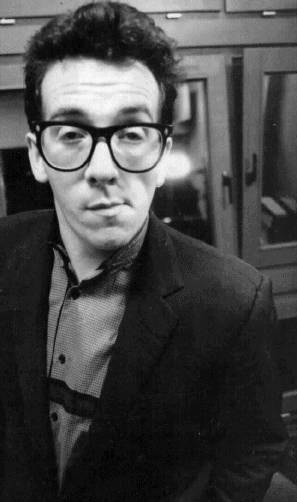
Declan McManus, was born fifty-four years ago today. Now better known as Elvis Costello, he was apparently made in 1954 for 1984.

Sunday, August 24, 2008

Chopped Liver

Back in 1989, Bob Dylan made a surprise appearance on the Chabad telethon, an annual Los Angeles event to raise money for the Lubavitcher movement. (The religious niceties of the Lubavitchers escape me, so my apologies in advance if I'm misrepresenting it.) This performance was much-discussed back in the 1990s, when there was really no outlet to see it; I saw it for the first time the other day, thanks to the wonders of YouTube.

Dylan appeared with Peter Himmelman, who, the host failed to note, was Dylan's son-in-law (and still is, near as I can tell), and Harry Dean Stanton. (I don't think Stanton's even Jewish.) Himmelman sings, Stanton plays harmonica, and Dylan tootles around on flute and recorder. The song they do, rather disappointingly, is not "Please Mrs. Henry":


This year's Chabad telethon is on September 18. You won't want to miss it.

Friday, August 22, 2008

One-Hit Wonder Week: "I've Never Been to Me," by Charlene


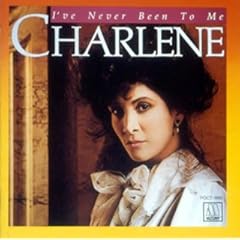
Charlene D'Angelo was born in 1950 in Hollywood, California, and was married at age 16, with a child soon to follow. She never gave up on her dream of a singing career, though, and got her big break when a demo she had cut called "Sweet Sad Clown" found its way into the hands of Motown's Berry Gordy. This is less surprising than it might sound, since Motown had moved its operations to Los Angeles in 1972; the label signed Charlene Duncan, as she was then known, in 1973, and released her single "All That Love Went to Waste" in January 1974. It flopped.

She didn't release another single until 1977's "It Ain't Easy Coming Down," which was credited to just Charlene. It appeared on an album called Charlene, which was credited to Charlene Duncan. Someone at Motown was asleep at the switch. At any rate, both the album and the single flopped. Charlene released one more album for Motown, Songs of Love, which was the same as Charlene except that one song, "I've Never Been to Me," had its spoken-word bridge edited out of it. Motown also released that song as a single, and finally Charlene had her first little bit of chart success; "I've Never Been to Me" went all the way to Number 97 on Billboard's Hot 100.

To hear Charlene tell it later, "I've Never Been to Me" was always a very special song to her. It was written by Ron Miller, who had co-written a bunch of Stevie Wonder's early hits: "A Place in the Sun," "For Once in My Life," "Yester-Me, Yester-You, Yesterday," plus "Touch Me in the Morning" for Diana Ross. “Those lyrics – ‘Hey lady, you lady, cursing at your life, you’re a discontented mother and a regimented wife’ – they hit me hard," Charlene said in 2007. "I was a battered wife, I’d married at 16, had a child to my first husband, and Ron Miller’s song just spoke to me. I didn’t even know him but I just cried and cried. He actually stopped the tape to give me space to cry. It was such a beautiful song.”

But it wasn't enough to provide Charlene with a career. She released one more single on Motown in 1980, then quit the business and moved to England with her new husband.

Then, in 1982, a Tampa DJ named Scott Shannon started playing "I've Never Been to Me." This time, it hit a nerve. Motown rereleased the single, and it became a huge worldwide hit, going to Number One in Britain. Here in America, it hit the Top Forty in March of 1982 and peaked at Number Three. (Despite sounding vaguely countryish, the song only went to Number 60 on the country charts.) "Now I was living in England at the time, working in a candy store doing cleaning, selling sweets and cigarettes and everything," said Charlene, "and I got a call from my mom saying that somebody at Motown was looking for me, and then I got a call at 2 am from Jay Lasker at Motown telling me my song was on the charts! I thought at first it was a bad joke!”

There has been an awful lot of controversy and misconception over this song, stemming from the on-again off-again spoken-word bridge and the line "I've been to crying for unborn children that might have made me complete." It has been alleged that the bridge was cut out to remove that line, which some think refers to abortion, but it's in the sung lyrics, not the bridge. Near as I can tell, "unborn children" has been in every version of "I've Never Been to Me." The spoken-word part, which was in the version Scott Shannon made into a hit, is totally hot, and goes like this:

Hey, you know what paradise is?
It's a lie, a fantasy we create about people and places as we'd like them to be
But you know what truth is?
It's that little baby you're holding, it's that man you fought with this morning
The same one you're going to make love with tonight
That's truth, that's love......


Motown rushed out an album called I've Never Been to Me, then followed that up with "Used to Be," a duet with Stevie Wonder that also served as the title track to her next album. It made it up to Number 46 on the charts. Charlene's next album, Hit and Run Lover, fared even worse.

Lately, she's been reduced to releasing a dance-mix version of "I've Never Been to Me," but at least she hasn't had to go back to the sweet shop. Scott Shannon, meanwhile, has been a popular Top Forty DJ in New York City for a couple of decades now, and apparently is now the announcer on the Sean Hannity show. I wouldn't know.

"I've Never Been to Me" has lived on in countless lists of the worst songs of all time; for me, the problem with the song is that it's utterly unconvincing. Who doesn't want to be undressed by kings and see some things that a woman ain't supposed to see? Hey, lady, I've been to me, and it's no paradise.

It's kind of a letdown to finish this week without a video sitting here, but Charlene resists embedding so you'll have to go here to see her.
Thursday, August 21, 2008

One-Hit Wonder Week: "Magic," by Pilot


The Bay City Rollers came across to most Americans as sort of a Scottish version of Menudo, but they were a real working band for a long time before their American success. (Their name comes from the alleged gambit of, in hopes of finding an American-sounding handle, throwing a dart at the map of the U.S.A. and landing on Bay City, Michigan. I hope they realized - with my apologies to our Michigander readers - that no American actually has ever heard of Bay City, and most of them, as I did, probably thought Bay City was a place in Scotland.)

The early Rollers were managed by a chap named Tam Paton, who wanted the boys to dress up in tartan and tam o'shanters and all that, making you wonder why they went to all the trouble of choosing an American name. Guitarist David Paton was having none of that, so he left the Rollers just as they signed their first record deal in 1969. (David and Tam don't appear to have been brothers, although I can't find anything to confirm that.) Organist Billy Lyall left the same band in 1971, and went on to become an engineer at Craighill Studios in Edinburgh.

Paton and Lyall bumped into each other, supposedly at the Edinburgh library, and decided to start writing songs together. After a year of this, with a hundred songs under their belt, they recruited drummer Stuart Tosh and went into the studio to lay down some tracks. They took the first letter of each of their last names, PLT, and called themselves Pilot, and secured themselves a deal.

Their label, EMI, assigned producer Alan Parsons to the project, coming off his engineering work on Pink Floyd's Dark Side of the Moon. Session guitarist Ian Bairnson also worked on the record, and was eventually asked to join the band, with Paton switching to bass. The first single, "Just a Smile," came out in June 1974, and went nowhere. The finished album, given the ungainly title Pilot (From the Album of the Same Name), came out in October 1974, a couple of weeks after the second single, "Magic."

"Magic" was a hit in Britain, going to Number Eleven in the fall of '74. The follow-up, "January," was even bigger, going all the way to Number One in January of '75. When they went back into the studio in March to cut their second album, Second Flight, again with Alan Parsons, they still hadn't made an impact in America.

It's not clear to me when "Magic" was released in America, but it moved into the Top Forty on May 10, 1975, and would eventually peak at Number Five while Pilot was on a European tour. Pilot wanted to be a respected rock band, but they found themselves in the same sheer-pop place as the Bay City Rollers. "We were reluctant pop stars and I was a very reluctant frontman - I'm very happy playing bass somewhere," Paton said later. "Fronting the band and having all the responsibility was just a bit too much for me really."

Lyall wasn't too crazy about it either. He hated touring and left the band before their third album. Shortly thereafter, Alan Parsons began recording Tales of Mystery and Imagination, the debut album from the Alan Parsons Project, and enlisted the remaining Pilot trio to play on it.

Pilot put out another album, another dud; drummer Tosh left, and the remaining pair put out an album called, lamely, Two's a Crowd. They were really bad at naming albums. When that one stiffed, too, Pilot called it quits. Paton went on to play with Elton John, Rick Wakeman, and a bunch of Scottish acts, as well as with the Alan Parsons Project. Tosh spent some time in 10cc. Lyall died of AIDS in 1989. Paton and Bairnson reunited in 2002 to make Pilot again, and are still sort of at it.

If any of them ever said anything about "Magic," I can't find it. It's too bad, because it's purt near a perfect pop song, and I'd love to hear how it came together. At least we can still hear the song:

Wednesday, August 20, 2008

One-Hit Wonder Week: "Cars," by Gary Numan


Back in 1977, as punk was breaking across England, a musician named Gary Webb put together a group called the Tubeway Army, and by the following year, the band had landed a deal with Beggars Banquet, a record label that had no affiliation with the Rolling Stones. Webb changed his name to Valerian, and changed his bassist and drummer's names to Scarlett and Rael, and they released a couple of singles in 1978 that bombed.

Webb/Valerian soon came across a Minimoog synthesizer and used it to put together the band's first full-length album, also called Tubeway Army. He also changed his name one more time, to Gary Numan. The album was more successful, selling out in its limited run. They followed that up with Replicas, a record directly inspired by science fiction and the work of Philip K. Dick that featured an unsmiling Numan on the cover. It went to Number One in the U.K., propelled by the Number One single "Are 'Friends' Electric?" (It hit Number 85 here in the U.S.)

Numan wrote and sang every song on Replicas, and played every instrument except bass and drums. So by the time Tubeway Army was ready to release its next album, it was credited instead to Gary Numan, even though the personnel hadn't changed. This one was called The Pleasure Principle, and again featured an unsmiling Numan on the cover. The onetime punk band now put out an album with no guitars at all. All the songs had one-word titles.

The first single from the record was "Cars," which was supposedly inspired by an incident in Numan's life. "I was in traffic in London once and had a problem with some people in front," he said later. "They tried to beat me up and get me out of the car. I locked the doors and eventually drove up on the pavement and got away from them. It's kind of to do with that. It explains how you can feel safe inside a car in the modern world, which is probably why you get things like road rage. When you're in it, you're whole mentality is different, in a car. It's like your own little personal empire with four wheels on it." I question the opening part of that - shouldn't they try to get you out of the car first, then beat you up afterward? - but whatever.

As striking as the song was, with its insistent synthesizers and crashing drums (and, incongruously, lots of tambourine), the video really helped make "Cars" a hit, with Numan's grim, emotionless visage. I remember hearing Casey Kasem talk about how Numan had read a SF story about a future where people had no emotions, and based his persona on that. That's probably somewhat true, given Numan's devotion to Philip K. Dick, but I also later heard Numan admit that he was really shy (he was still only 21 when Pleasure Principle came out), and found it hard to enjoy himself and smile in his videos.

There may also be a medical reason for this. "Just recently I actually found out that I'd got a mild form of Asperger's Syndrome which basically means I have trouble interacting with people," Numan said in 2001. "For years, I couldn't understand why people thought I was arrogant, but now it all makes a bit more sense."

"Cars" was released in the U.K. in August 1979, and landed at the Number One spot by September. In the U.S., "Cars" motored into the Top Forty the last week of March 1980, eventually pulling in at Number Nine on the charts. Contrary to his somber image, Numan had turned into a bit of a party boy, being expansive in interviews with the press and driving recklessly around London in a white Corvette that Beggars Banquet gave him. Yes, of all people, wrote a song supposedly about Numan, called "White Car"; its lyrics, in their entirety, are: "I see a man in a white car/Move like a ghost on the skyline/Take all your dreams/And you throw them away/Man in a white car."

The followup to "Cars" was a song called "Complex," which went to Number Six in Great Britain but didn't make the Hot 100 in America. Numan's follow-up to The Pleasure Principle, Telekon, was his third straight Number One album in the U.K. It didn't do much in the States, where the single "I Die: You Die" stalled at Number 92 on the charts. It would be Numan's last entry in Billboard's Hot 100.

The "Cars" video predates MTV, but it seems like everyone has seen it anyway, on USA's Nightflight or something. "I thought it was excellent," Numan said later of music video. "I thought it was the future of everything." Here's the future as it looked in 1980:

Tuesday, August 19, 2008

One-Hit Wonder Week: "Steal My Sunshine" by Len


Back in 1975, a Nashville-born woman named Andrea True with a background in what Casey Kasem called "blue movies" went to Jamaica to make a commercial promoting the real estate industry on the island. While she was there, she felt like making a record, and a record producer she knew named Gregg Diamond gave her a song to cut. Andrea True (that was apparently her real name) wrote lyrics for it, and the result was a song called "More, More, More."

Andrea, who was already 32 at the time, had never recorded before, but "More, More, More" became a huge hit, under the band name the Andrea True Connection. The song went all the way to Number Four in the spring of 1976, a peppy disco hit distinguished by its poor singing and late piano break - not even a middle eight, just a little vamp Diamond threw in at the end.

Fast-forward about twenty years, to a brother and sister act from Toronto calling itself Len and heavily influenced by, of all people, Human League. Although their first two EPs were more punky, Marc and Sharon "Shar" Costanzo added three new quasi-members to the band for their first LP, 1999's You Can't Stop the Bum Rush, for more of a hip-hop sound. (By that point, Marc had also done a brief stint as the guitarist in Sum 41.) For "Steal My Sunshine," Marc Costanzo raspily rap-sung over the Andrea True sample, trading verses with his sweet-voiced sister Sharon. They didn't realize how buoyant it sounded, though, nearly leaving it off the LP: "Two days before the album went out," Marc said later, "we were like, 'Ah, let's put that one on.'"

Good thing they did. Even before the record was officially released, director Doug Liman, making his sophomore follow-up to Swingers, decided to use the song in his film Go, a Katie Holmes starrer that came out in the spring of 1999. Although that couldn't have hurt the song's popularity, I don't know how much it helped, either, because "Steal My Sunshine" didn't crash the Top Forty until September.

It would eventually go to Number Nine in the U.S., peaking just before the end of the century. In Len's native Canada, of course, it went to Number One.

And that was it for Len. They almost released a follow-up album in 2002, called We Be Who We Be, going so far as to send out advance copies and get written up in Rolling Stone, but the record was never actually released, for reasons that remain obscure to me. Finally, in 2005, Len's second full-length LP, a new record called The Diary of the Madmen, came out only in Canada (featuring a song called "We Be Who We Be"). Apparently there have been some drug problems. Although Len is still officially a going concern, Marc Costanzo is now a senior creative consultant at EMI Music Publishing Canada, no doubt looking for the next Glass Tiger.

"Some people think we suck, some people think we're a mistake, and that's OK," Sharon said in 1999. "We get to travel, we get to play in front of lots of people, it's great. I might wind up broke and selling vacuum cleaners in the end, but at least I'll get some frequent flyer miles out of this." Shar Costanzo turns 40 next month.

It's funny how much more information I was able to find out about "Telstar," which is 46 years old, than I was about this song recorded ten years ago. Still, it's terrific. I can't embed it, but you can see it here.

Sunday, August 17, 2008

One-Hit Wonder Week: "Telstar," by the Tornados


Joe Meek was a pop-music producer with one Top Ten U.K. hit under his belt, "Angela Jones" by a singer named Michael Cox, when he opened up his own recording studio, RGM Sound, a three-story flat over a leather-goods store in Islington, London. He almost immediately had a Nmber One hit in Britain, "Johnny Remember Me" by John Leyton, which never charted here in the U.S., but its ghostly echo and unearthly female vocals helped make Meek's reputation as the most exciting pop producer in England.

Meek's backing band was a group called the Tornados (in the U.S., this got translated as Tornadoes), who played on all the RMG songs much as the Funk Brothers did in Motown. Meek would also occasionally have them rip out an instrumental, and after AT&T launched the Telstar satellite (the first satellite to transmit phone communications) in July 1962, Meek wrote a song inspired by this, complete with rocket sounds and space-age keyboards. Meek played no instruments himself and never learned to read and write music, but he sang the melody into a recorder, added a drum track, and sent this to the Tornados at their summer-long gig in Great Yarmouth in northern England, leaving the band itself to work out the chords.

The song, also called "Telstar," was released on August 17, 1962, prominently featuring the clavioline, which was kind of halfway between an organ and a synthesizer. The solo on Del Shannon's "Runaway," from the year before, was played on a clavioline. On "Telstar," it provided a real Tomorrowland kind of feel, accentuated by special effects such as the rocket-launching sound in the opening, which was in reality the sound of a toilet flushing played backward. It got leaked to the press (I assume by Joe Meek himself) that he had actually transmitted the song to the Telstar satellite and back, and that was the real source of all the weird sounds.

I should pause here and note that Joe Meek was totally nuts. He was gay, which was not only difficult in early-60s England but illegal, and Meek was arrested at least once on a morals charge. He was, not surprisingly, paranoid, accusing his rival Decca Records of placing microphones in his wallpaper a la Gene Hackman in The Conversation. He would put tape recorders in graveyards, hoping to capture voices from the great beyond, and claimed Buddy Holly spoke to him in his dreams.

But he sure could make records. The technology of the day meant the Tornados had to play the song live in the studio, straight through. They showed up at RGM on a Monday morning in the summer of 1962 and played "Telstar" and its B-side, "Jungle Fever," over and over till 3:30 in the afternoon, when they had to drive back up to Great Yarmouth. Meek was left alone to do some primitive overdubbing to finish the track.

"Telstar" was released in England on August 17, 1962, and was a huge smash. It went to Number One on October 6 and stayed there for five weeks, becoming the biggest-selling British single of 1962. Here in the U.S., "Telstar" launched into the Top Forty on November 17th and cruised to Number One on December 22nd, staying there for three weeks, and thus becoming the last Number One hit of 1962, the first Number One hit of 1963 (it would be followed in the top spot by Steve Lawrence's "Go Away Little Girl"), and the first Number One hit in America for a British group.

That was the only U.S. hit for the Tornados, although they placed a handful of other singles on the British charts. Meek worked with a whole flotilla of British artists in the Sixties, although the only other song he produced that made a dent on the U.S. charts was "Have I the Right?," which went to Number Five for the Honeycombs in late 1964. Shortly thereafter, even Meek's U.K. hits stopped coming, and he fell into financial problems, in part because a French composer named Jean Ledrut accused Meek of plagiarizing "Telstar" from a song he write for the French film Austerlitz, which kept Meek from collecting royalties on his biggest hit. The suit was finally decided in Meek's favor in 1968.

But by then it was too late. On February 3, 1967, eight years to the day after Buddy Holly's plane went down, Meek swiped a shotgun from Tornados bassist Heinz Burt, shot his landlady, then took his own life.

"Telstar" lived on, in cover versions by dozens of artists, including none other than Duke Ellington. The Tornados broke up in 1965, except for a few fitful partial reunions. The band Muse, now best known for their hit "Starlight," is led by Matthew Bellamy, the son of the Tornados' rhythm guitarist, George Bellamy. But they've never topped "Telstar":