Friday, January 9, 2009

Shatner Speaks: I'm Not the Man They Think I Am at Home


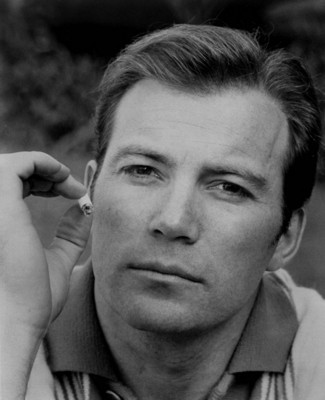
Faithful readers - and do I have any other kind? - will remember that some time ago I expressed some wonder about whether William Shatner's legendary Brechtian performance of "Rocket Man" was intended to be taken seriously. This afternoon, I picked up Shatner's autobiography, Up Till Now, for other reasons, but then I realized it might also hold the key to that question.

Sure enough, Shatner tackles the issue head-on. First of all, he reveals that the spracht-singing, which took place when Shatner hosted the 1978 Science-Fiction Movie Awards, was all his idea. "When I was asked to perform the song I thought I'd try something very unusual," Shat writes. "I'd perform the song in its many layers, doing part of it like Sinatra might do it, another part of it emphasizing the rock-it, man, hip aspect of the song, and honestly, I've forgotten the third level." That's a shame, because I'm sure that was the most excellent level of all.

Bill runs through a description of his performance - "a few lines later a third Shatner appeared, a tired, disheveled, perhaps even dissolute man" - before getting to the fallout:

The audience was stunned. People watched in shock and awe and then asked the question, Is he kidding? There is a very thick line between performing a song seriously and doing it in mock seriousness - doing it well enough to confuse the audience about that is the actor's art. Was I trying to make my performance humorous? Was it intended to be a parody of meaningful singers with cigarettes? Or was I simply out of my mind?

As so many of the great science-fiction movies remind us, there are some things that mankind was never meant to discover. I will simply report that this remains the best-known performance of the song "Rocket Man" ever done.


Now, Shatner doesn't seem to appreciate that the answer to "was I out of my mind" is clearly "yes," but that that doesn't preclude any of the other answers. Still, I came to this book hoping that Bill would settle the question. In the end, I think he's done so much more than that.

Thursday, January 8, 2009

Let's Don't Let a Good Thing Die

Had he lived, Elvis Presley would have been 74 today. That's not so old - in fact, it's young enough that he'd probably still be on a stage somewhere if he were alive. Elvis was younger than Chuck Berry, or Little Richard, or Frankie Valli. Elvis was younger than Leonard Cohen.

Elvis was younger than Clint Eastwood, or Philip Roth, both of whom still appear to be at the peak of their powers. He was younger than Hank Aaron, or Dame Judi Dench, or Mel Brooks, or Janet Malcolm, or Pat Boone, or Tim Conway. He should still have a career.

People these days seem to think that Elvis wasn't much more than his epochal Fifties recordings, that after he went into the army his musical output wasn't worth a whole lot. I'm more inclined to listen to his recordings from around 1968 to 1972, about the time he stopped making movies (his last being 1969's Change of Habit, with Elvis as a doctor in the ghetto and Mary Tyler Moore as a nun). He cut a lot of very adult, complicated material around then, half-country and half-pop, and everything he did was worth hearing. He did a lot of covers then, too, of songs such as B.J. Thomas' "I Just Can't Help Believin'" and Dusty Springfield's "You Don't Have to Say You Love Me." And no matter who did the song originally, Elvis was a better singer.

Here's Elvis doing his 85th Top Forty hit, "Kentucky Rain," which stalled out at Number 16 in 1970. My lord, what a singer he was - just listen to the desperation and determination in his voice. This recording is also notable for having the most reverb on the vocal of any single I can think of; Elvis sounds like he was singing from the middle of an emptied-out Linens n Things. Was it yesterday - no wait, the day before!

Why Can't This Be Decent English?

Speaking of lyrical redundancies, I just heard Sammy Hagar get off a doozy in Van Hagar's "Why Can't This Be Love." After singing "Only fools rush in," he goes for a clean sweep of cliches by adding, "Only time will tell if we stand the test of time."

I guess it's hard to argue with that. It's not as if distance will tell if you stand the test of time.

Wednesday, January 7, 2009

Some People Call Me Maurice

Steve Nieve has long been Elvis Costello's keyboardist, from This Year's Model, where the Attractions were first introduced, right up to an opera called "Welcome to the Voice" that Nieve wrote, in which Elvis and Sting starred when it was staged in Paris last month. But there was one album by Elvis Costello and the Attractions that Nieve wasn't credited on: Goodbye Cruel World, which Costello describes as "the worst album of my career." On that one, the keyboards were played by one Maurice Worm.

I always thought this was strange, since Nieve was probably the key member of the band, although since the record wasn't much good, I thought it also pointed up his value to Elvis' work. On the video for the first single, "The Only Flame in Town" (featuring our old friend Daryl Hall in full "Adult Education" mode), rather than the customary tousle-haired downcast keyboardist, you saw an idiot with a baldy sour.

But that was Steve. He was no stranger to changing his name, having been born Steven Nason and variously billed as Steve Naive and Steve Neive in addition to his customary nom de guerre. But Maurice Worm? (I'm sure he pronunced it "Morris," as the British are wont to do.) What was that all about?

I did find an interview in which the questioner noted, "In 1984, Maurice Worm said that 'Music is a boomerang.'" Nieve responds: "In 1984, Maurice Worm said a lot of things that I am not absolutely aware of." I don't find that exchange very satisfactory, but it's the only one I've found in which Nieve addresses the issue at all. (One other thing I learned from that interview was that bassist Bruce Thomas, who hasn't been in the Attractions for some time now and is apparently hated by Elvis, has written a biography of Bruce Lee.)

Here's the video for "The Only Flame in Town," in which the director goes along with the gag and calls him "Maurice." I seem to be posting a lot of lame videos lately; I'll try to find something good for you to watch.

Consumer News

If you're as big a fan of Alfred Hitchcock as I am, you'll be delighted to know that the first three seasons of Alfred Hitchcock Presents are available for free viewing over at Hulu.com. Be sure to check out "Lamb to the Slaughter," from the story by Roald Dahl and featuring Vertigo's Barbara Bel Geddes - and directed by the Master himself.

Live and Let Parse

I think Paul McCartney got kind of a bad rap from people who complained that he was singing "But in this ever-changing world in which we live in" during "Live and Let Die." First of all, "Live and Let Die" is a really good song, and he's Paul McCartney, so one is inclined to cut him some slack. But more importantly, I've always heard it as "In this ever-changing world in which we're living," which is at least grammatical.

It's plausible, isn't it?

Monday, January 5, 2009

She's Back


Hall and Oates get a fair amount of ridicule - even around these parts - for their string of lightweight but hugely popular singles in the 1980s, but they basically had two careers, the first being their handful of pure-pop hits in the 1970s, and the second "Maneater" phase following a brief dry spell in the late 1970s. It was during the latter period that their cover story in Rolling Stone came with the best headline in that magazine's history: "The Self-Righteous Brothers." In the earlier incarnation, though, they were actually quite good, with "Sara Smile," "She's Gone," and "Rich Girl" all being fine radio singles.

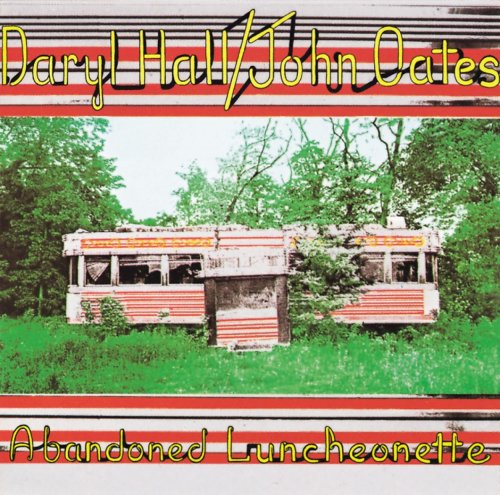
It's "She's Gone" that we're concerned with today. H&O recorded it in 1973 for their second album, Abandoned Luncheonette, following their 1972 debut floppola Whole Oats. "She's Gone" was the single from Luncheonette, with a video and everything, but it didn't go anywhere, peaking at Number Sixty on the Hot 100 in 1974.

The R&B brother act Tavares heard the song somehow, and released their own version of "She's Gone" in September 1974, and it went all the way to Number One on the R&B charts. Meanwhile, Hall and Oates continued to scuffle along; their 1974 album, War Babies, peaked at a miserable Number 86 on the album charts and got them bounced from Atlantic Records.

But they signed with RCA and cut an album called simply Daryl Hall and John Oates, with a cover photo inspired by the Edgar Winter Group's They Only Come Out at Night. Its first single, "Alone Too Long," had an almost embarrassing performance, missing the Hot 100 and peaking at a pathetic Number 98 on the R&B charts, but the follow-up was "Sara Smile," and finally Hall and Oates had a hit. A huge one: It went all the way to Number Four in the spring of 1976.

So somebody at Atlantic said, "Hey, that 'She's Gone' record was pretty good, and it was a big R&B hit - maybe it's worth something." So it got re-released in August of 1976, seemingly as the follow-up to "Sara Smile," but really it was on a whole other label, from a three-year-old album. And it was almost as huge, going to Number Seven.

I'm always fascinated by songs that become hits years after they were actually recorded. I think they deserve a little bit of extra credit for being ahead of their time. And I don't think anyone before has ever accused Hall and Oates of being ahead of their time. Here's that original video, which, unlike the song, is a great, stinking pile of crap, including the boys' tossing Monopoly money at a gentleman dressed as Satan during the line "I'd pay the devil to replace her."

Sunday, January 4, 2009

Take a Good Long Look

I was watching Gus Van Sant's 2002 movie Gerry the other day, and I was reminded of a very different movie, Alfred Hitchcock's Rope, from 1948. Gerry is about two friends lost in the desert, while Rope is about two friends who kill a guy in New York City and then have some people over for a cocktail party while his body is hidden in a trunk. But they are stylistically very similar in that both employ excruciatingly long takes.

Rope is famous as Hitchcock's attempt to shoot a feature-length film in a single take. He couldn't do that, but he did manage to do it in a series of eight-minute shots, split evenly between cuts and places where Hitchcock disguised the introduction of a new roll of film by going to a quick blackout on, say, the back of Jimmy Stewart. There has been much discussion of how exactly he did this, but less discussion of whether it was successful as anything other than a stunt. I think it was; at later points in the movie, the steadily held gaze of the camera builds up tremendous tension, as if we're not permitted to look away from the screen for even a second.

The long takes in Gerry serve a disparate purpose; they emphasize how tedious it is to walk around the desert lost for days on end. According to IMDB, there are 100 takes in the roughly 100-minute movie, so they average a minute, which is really long compared to your basic comic-book film, which probably doesn't have a single take lasting a minute. There's one tight shot of Matt Damon and Casey Affleck walking for probably three or four minutes, as we see only their faces bobbing back and forth and hear their feet pound sand.

It may not be what people call "entertaining," but those interminable, dragged-out takes will make you think twice about getting lost in the desert. And the value of that can't be ignored.

Saturday, January 3, 2009

Over Easy

Have you ever heard of a pop singer from the late Sixties named Marilyn Maye? She holds the record for having the most adult contemporary hits without ever having one reach the Billboard Hot 100 - including one from late 1967 called "Step to the Rear," from the Broadway show How Now, Dow Jones, which went all the way to Number Two on the AC charts, but didn't get anywhere near the real Top Forty.

That's kind of sad, isn't it? It's like holding the record for the most homers by a minor leaguer, or being Miss South Dakota. Apparently she was some sort of cabaret-jazz singer, so she probably didn't care too much about having pop hits, although they sure wouldn't have hurt her career any. Miss Maye is still hanging in there, performing in clubs at the age of 80, so maybe that pop hit is still in the offing.

Actually, Marilyn Maye is tied for the record with Beth Nielsen Chapman, who had eight AC hits between 1991 and 2000 without ever making the Hot 100. Chapman is better known as a country songwriter, most notably on Faith Hill's "This Kiss." But by far the most remarkable thing about her is that she got her start in an Alabama rock band called Harmony, which she joined in 1976 after its former singer and guitarist Tommy Shaw left to join Styx.

Friday, January 2, 2009

The Socio-Ethnic Implications of Don Larsen's Perfect Game

The MLB Network made it debut yesterday, marked primarily by Harold Reynolds' heroic restraint in not giving his comely co-host Hazel Mae a hug and by the airing in its entirety of Don Larsen's perfect game in the 1956 World Series. While the last thing the baseball world needs is more mythologizing of the Dodgers and Yankees of the 1950s, the fact that they showed the whole game - including many Gillette commercials, with ultrarare footage of Don Newcombe shaving with the "heavy" razor, an obvious precursor to the later classic Deacon Jones/Multiblade episode of "The Odd Couple" - allowed us a glimpse into how the game was played two generations ago.

If you were watching closely, here's some of what you might have noticed:

* While I can't find the exact starting time for the game, I think it was about 3:00 in the afternoon, which meant that in October in New York, the shadows had already crept between the batter's box and the pitcher's mound. Dodger hitters spent the entire afternoon watching the ball emerge in the sunlight then disappear into half-darkness. It's no wonder these games were so low-scoring.

* They didn't bring out a new ball for each inning, which means that after an infielder recorded a third out, he'd simply roll the ball onto the mound (which would only make it dirtier) rather than flipping it back to an umpire or tossing it into the stands as they do today. After Dodger pitcher Sal Maglie struck out to end the Dodger sixth, Yogi Berra simply flipped the ball to him so Maglie would have it to start the seventh.

* There appeared to be a strange white object, maybe someone's discarded T-shirt, in short leftfield at one point. I have no idea what that was.

* When the pitchers were scheduled to hit, they didn't come into the on-deck circle but stayed in the dugout until they were due at bat. Both Maglie and Larsen did this, trotting out of the dugout as if they had been in the bathroom when Bob Sheppard called their name.

* When Mickey Mantle hit lefthanded, the Dodgers shifted their infield so that three players were between first and second bases and only Jackie Robinson, playing third, was on the left side of the infield. I had no idea teams ever used that kind of shift on Mantle.

* After the teams recorded an out with no one on base, and they ritually whipped the ball around the infield, they included the catcher, which no one does today. This was a nice democratic touch.

MLB Network has promised a series of All-Time Games, which will be very handy for this kind of sociological analysis. Unfortunately, the Web site lists only this game so far as part of this slate. I guess this means if you missed it, you'll have plenty of chances to catch it again.